How long does Invisalign take, and does it hurt?

Clinically reviewed by Kuldip Singh · Practice manager · 16 October 2026
Invisalign treatment time depends on the changes needed and your individual plan; there is no reliable finish date for everyone. Ask your clinician for an estimate after assessment. Temporary soreness can occur with new aligners, and discomfort varies. Your wear routine, reviews and retention plan all need to be explained before treatment.
Start with your own assessment
A short course aimed at limited changes is different from treatment intended to improve how the teeth bite together. Ask what the proposed plan will and will not achieve, its estimated duration and what could change that estimate. A shorter advertised treatment is not automatically the right treatment.[2]
Clear aligners are not suitable for every problem. Fixed braces or specialist advice may be more appropriate. Our aligners-versus-fixed-braces guide explains the wider choice. You can also decide against elective treatment after considering the options.[1][2]
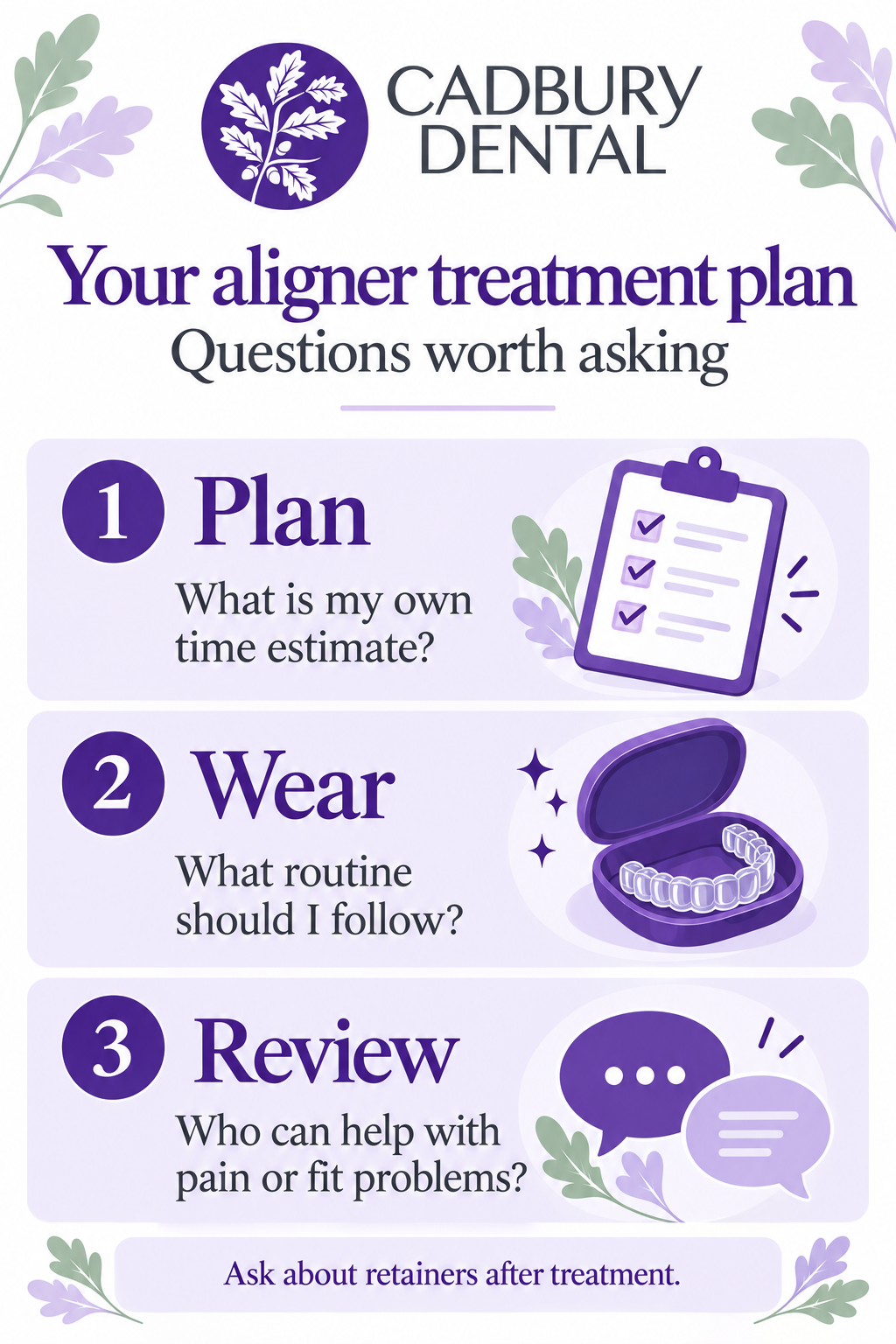
Text version of this image
CADBURY DENTAL Your aligner treatment plan Questions worth asking 1 Plan What is my own time estimate? 2 Wear What routine should I follow? 3 Review Who can help with pain or fit problems? Ask about retainers after treatment.
Build the daily routine into your decision
Aligners depend on consistent wear. BOS guidance advises removing them for eating, drinks other than plain water and brushing. Your treating team should explain the prescribed wear, cleaning and change schedule for your own appliances. Tell them if you cannot manage that routine.[1]
Attachments may be part of an aligner plan. Our Invisalign attachments guide explains their purpose. Ask separately about any proposed enamel reduction or other procedure, including why it is needed and its risks.[1]
Discomfort and risks need a realistic discussion
Minor temporary discomfort can occur when starting a new aligner; speech may also feel different initially. That does not mean everyone follows the same day-by-day recovery pattern. Orthodontic treatment can involve risks to tooth roots, gums and tooth surfaces, and the intended result is not guaranteed.[1][3]
Contact your treating team if pain is severe, continues beyond the expected settling period or comes with gum problems or an appliance problem. Ask before starting who to contact and what to do if an aligner is lost or no longer fits. Follow individual advice rather than choosing a different aligner yourself.[3][4]
Reviews and retainers are part of treatment
Keep the monitoring appointments and ordinary dental check-ups agreed with your team. Cleaning remains important during treatment; aligners do not protect teeth from decay or gum problems.[4][3]
Teeth can move again after treatment. Our retainers after Invisalign guide covers the separate retention decision. Ask what retainers, reviews and replacement arrangements are included in the plan.[2]
Discuss your plan at Cadbury Dental
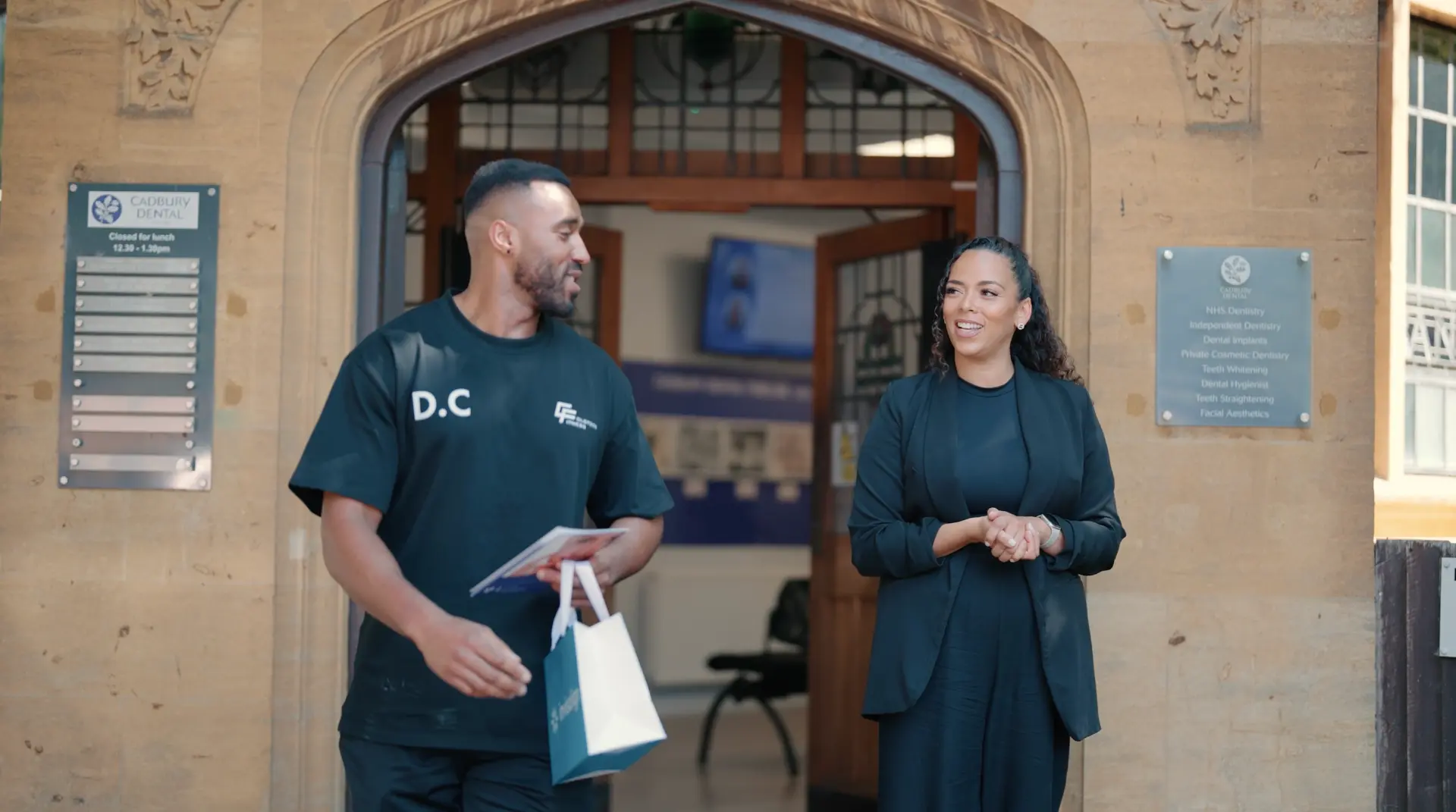
Cadbury Dental Practice is in Bournville, Birmingham.[5] The Cadbury Invisalign page provides a route to discuss your teeth, goals and suitable options. Ask for an explanation you understand before deciding.
Invisalign & straightening: your questions on this topic
Can I rely on a fixed Invisalign finish date?
Ask for an estimate based on your assessment and the planned changes. Treatment aims and complexity differ, so a general duration is not a guarantee for your own teeth.
Is Invisalign completely painless?
No. Temporary soreness can occur, and experiences differ. Contact your treating team about severe or persistent pain rather than assuming it is part of a standard timetable.
Who decides when I change my aligners?
Your treating team sets the wear and change instructions. Ask them what to do if the routine is difficult or an aligner is lost, damaged or does not fit.
Do I still need normal dental check-ups?
Yes. Orthodontic monitoring and routine dental care have different purposes. Keep the reviews and check-ups agreed with your dental team.
Are retainers separate from active aligner treatment?
Yes. Retention helps limit teeth moving back after active treatment. Ask what retainer routine and continuing reviews your plan requires.
Sources
- [1]Aligners: Patient Information Leaflet — British Orthodontic Society. Checked 16 October 2026.
- [2]Everything you need to know before having your teeth straightened — British Orthodontic Society. Checked 16 October 2026.
- [3]Orthodontic treatment: what are the risks? — British Orthodontic Society. Checked 16 October 2026.
- [4]Braces — NHS. Checked 16 October 2026.
- [5]Cadbury Dental Practice: map and contact details — Care Quality Commission. Checked 16 October 2026.
Go deeper