Invisalign vs fixed braces: which is right for me?
Clinically reviewed by Kuldip Singh · Practice manager · 12 October 2026
Neither Invisalign nor fixed braces is best for everyone. Clear aligners are removable; fixed braces stay attached to the teeth. The choice depends on your teeth and bite, the movements needed, oral health and whether you can follow the treatment routine. Both require care and reviews, and retention after treatment.
Start with suitability, not a brand promise
An assessment should explain which tooth movements are needed and the suitable options. Aligners can straighten teeth and improve the bite, but may not suit every case. Fixed braces or specialist advice may be more appropriate for some problems. Ask why the proposed approach fits your own teeth.[1][4]
How the daily routines differ
| Consideration | Clear aligners | Fixed braces |
|---|---|---|
| Appliance | Removable clear appliances, sometimes with attachments or elastics | Brackets attached to teeth, connected by wires |
| Daily routine | Follow the prescribed wear and cleaning instructions | Keep the teeth and appliance clean and follow food advice |
| Appearance | Can be discreet; attachments may be more noticeable | Brackets and wires remain on the teeth |
| Your responsibilities | Wear as directed and attend monitoring | Attend adjustments and maintain oral hygiene |
| After treatment | A planned retention routine | A planned retention routine |
These practical differences are described in patient guidance; your own treatment instructions take priority.[1][2]
Removing an aligner for meals does not remove the need to follow its wear plan. Ask how you would manage meals, drinks and cleaning in your day. Our Invisalign attachments guide explains why tooth-coloured attachments may also be part of a plan.[1]
Fixed braces still depend on your cooperation. Cleaning around brackets and wires, following food advice and keeping appointments are part of treatment. An appliance remaining in place does not prevent decay, gum problems or breakages.[2][3]
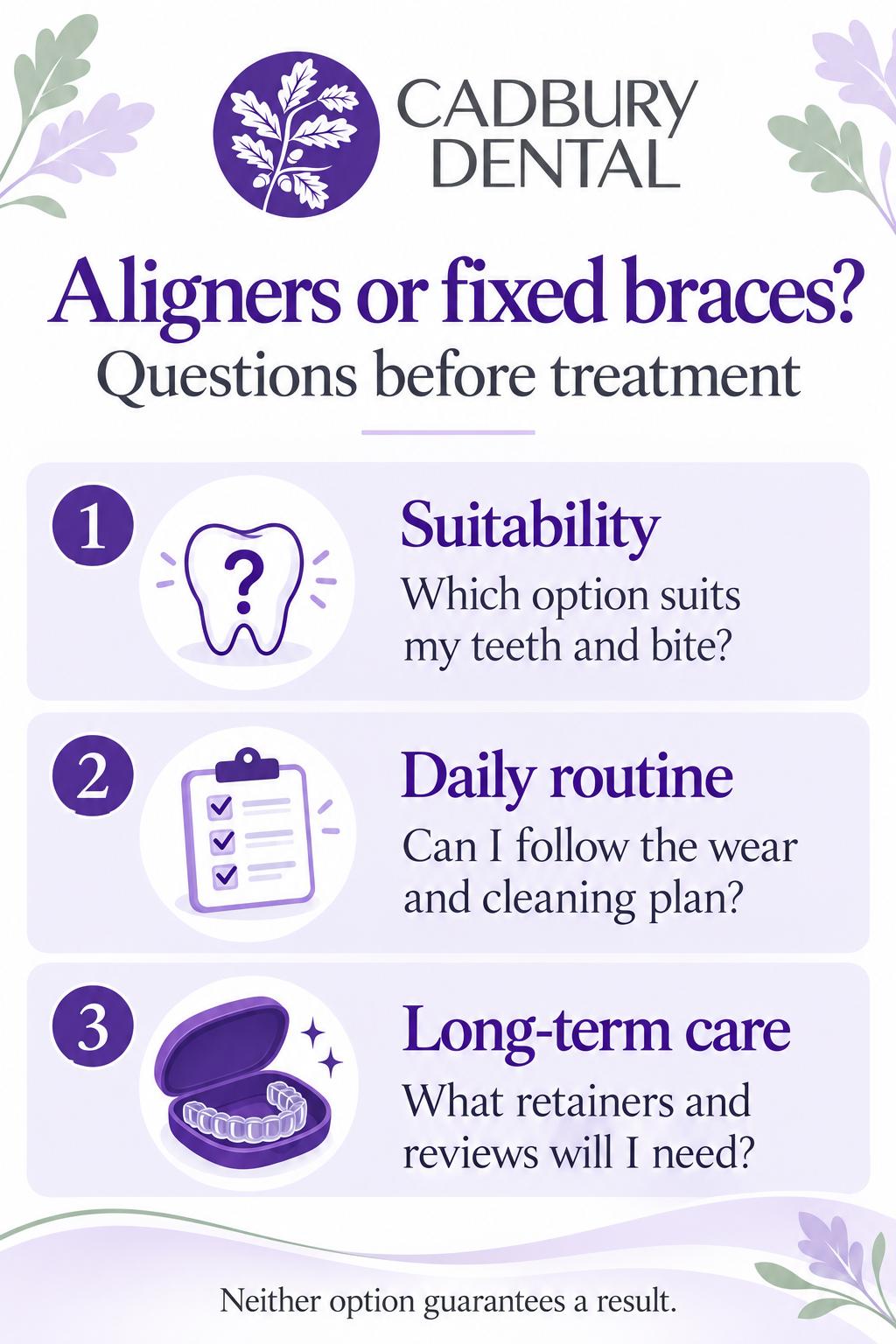
Text version of this image
CADBURY DENTAL Aligners or fixed braces? Questions before treatment 1 Suitability Which option suits my teeth and bite? 2 Daily routine Can I follow the wear and cleaning plan? 3 Long-term care What retainers and reviews will I need? Neither option guarantees a result.
Comfort, risks and treatment length
Soreness can occur with either approach. Orthodontic treatment has risks, including damage associated with poor cleaning and changes to tooth roots. Your dental history can affect individual risks. Ask your clinician to explain these and what to do if pain persists or an appliance causes problems.[3][2]
Do not choose on a promise that one appliance is always faster. Ask for an estimate based on your treatment plan and what could change it. Following instructions matters, but no appliance guarantees the result.[1][4]
Plan for retention and the whole treatment
Both approaches need a retention plan to help limit teeth moving back. Our retainers after Invisalign guide explains the separate retention decision. Your clinician should set the wear and review instructions for your own retainers.[1][2]
Ask what the plan includes, who will provide treatment, and how review visits and retainers are arranged. Compare the options, limitations and total fees in a written plan rather than a headline promise. You can take time to decide, seek another opinion or choose no elective treatment.[4]
Discuss Invisalign at Cadbury Dental
Cadbury Dental Practice is in Bournville, Birmingham.[5] The Cadbury Invisalign page provides a route to discuss your concerns and suitability. Ask about alternatives or referral if another approach would better meet your needs.
Invisalign & straightening: your questions on this topic
Are clear aligners always invisible?
No. Clear plastic may be discreet, but attachments or elastics can be more noticeable. Ask what your particular treatment plan would involve.
Do fixed braces mean I have less to do?
They stay attached, but you still need careful cleaning, food precautions and appointments. Fixed braces do not remove your responsibilities during treatment.
Which option straightens teeth faster?
There is no universal winner. Ask for a case-specific estimate, including the movements planned and factors that could change progress.
Can aligners treat a bite problem?
They can improve the bite in suitable cases, but an assessment must determine whether they can achieve the movements you need or whether another approach is more appropriate.
Do both aligners and fixed braces need retainers?
Retention is part of both treatment journeys. Your clinician should explain your retainer options and the wear and review plan needed to limit teeth moving back.
Sources
- [1]Aligner: Patient Information Leaflet — British Orthodontic Society. Checked 12 October 2026.
- [2]Braces — NHS. Checked 12 October 2026.
- [3]Orthodontic treatment: what are the risks? — British Orthodontic Society. Checked 12 October 2026.
- [4]Everything you need to know before having your teeth straightened — British Orthodontic Society. Checked 12 October 2026.
- [5]Cadbury Dental Practice: map and contact details — Care Quality Commission. Checked 12 October 2026.
Go deeper